Doming is one of the easiest ways to give your artwork a clean, professional looking finish.
A doming resin is thick enough to sit neatly on top of your piece without running down the sides, creating a beautiful curved "dome" of resin that catches the light and makes your work shine.

What is the best resin for doming?
Not all resin products work well for doming. A good doming resin needs both good surface tension and a higher viscosity. Let's take a closer look.
How Does Surface Tension Affect Doming?
A resin with good surface tension holds the dome shape. Think of surface tension as the resin's invisible skin. As long as that surface isn't broken, the resin can hold its shape and maintain a smooth dome right to the edge of your artwork.
How Does Viscosity Affect Doming?
The best resins for doming are those with a higher viscosity. Viscosity refers to how thick or thin a resin is. A thicker, higher viscosity resin is easier to control and stays where you put it, making it ideal for doming. It also helps support the resin's surface tension, allowing the dome shape to hold.
Is ArtResin A Doming Resin?
Yes! ArtResin is perfect for doming. Its thick consistency and excellent surface tension make it easy to guide right to the edges of your artwork without spilling over. The result is a smooth, glossy dome with clean edges and a professional-looking finish.

How Do I Dome Resin?
Doming is an easy technique that just takes a bit of patience and a steady hand. It works best on a rigid surface with a 90-degree edge, such as wood art panel or coaster.
Start by pouring the resin in the center of your piece and slowly guiding it toward the edges.
💡 TIP: Because ArtResin is self levelling, make sure your artwork is perfectly level before you pour. If your piece is tilted, gravity will pull the resin over the edge, causing the dome to break and spill down the sides.

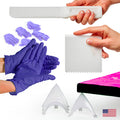
Using a spreader, a plastic knife, a popsicle stick, or a make-up spatula (pictured below), gently nudge the resin to the edges of your piece, one edge at a time.
💡 TIP: When you're first learning to dome, you can tape off the sides as extra insurance. Once you get the hang of it, you likely won't need tape at all. ArtResin's thick consistency makes it easy to guide right to the edge while keeping the resin where you want it.


That's all there is to it!
With a little patience and a steady hand, doming is an easy way to give your artwork a clean, professional looking finish, while keeping the sides clean and tidy.
Once your resin has cured, you can leave the edges natural, paint them, add gold leaf, or finish them however you like.
FAQs
Why is my resin running over the edges?
This usually happens when the artwork isn't perfectly level or when too much resin has been applied. Always check that your piece is level before pouring.
Can you dome resin on canvas?
Doming works best on rigid surfaces with a crisp defined edge, such as wood art panels, MDF panels, coasters, jewellery bezels, and acrylic blanks. Traditional stretched canvas and canvas boards are generally not suitable because the edges are quite uneven and the resin can easily spill over.
How thick can you dome resin?
A resin dome is typically the same thickness that the resin levels out too - approximately 1/8" (3 mm). If you wish to have a thicker coat, you can let the first layer cure, sand it lightly to create some tooth, and then apply a second coat over top. Just be careful when doming in case the first coat isn't entirely even.
Do you need to tape the sides when doming resin?
Not necessarily. Many artists tape the sides when they're first learning, but once you're comfortable with the technique, ArtResin's thick consistency makes it easy to dome without tape. However, you can never go wrong with the extra insurance that taping provides.
What's the best tool for doming?
A sturdy tool with a flat edge works best for guiding resin right to the edge of your piece. You can use a spreader, plastic take-out knife, a craft stick, or a make-up spatula.
Personally, I prefer using a smaller tool and working my way around the piece, but the best tool really depends on the size of your artwork.
For smaller pieces, my favorite tool is my little pink make-up spatula pictured below! For larger pieces, ArtResin's spreader is a great choice!

Now that you know how to dome your Resin, learn about How to Selectively Embellish your Artwork with Epoxy Resin.
Do you want to learn more about resin art? Read our guides below:
- Dutch pour techniques for epoxy resin art
- 3 ways to get thick layer of resin
- How to get a matte resin finish
- 5 ways to finish the edges of your artwork
ArtResin: Made For Artists, By Artists.