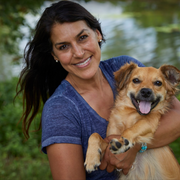
Congratulations to artist Ben Willis, our latest ArtResin Winner! Based in Phoenix, Arizona, Ben is a mixed media artist, "dancing somewhere in between painting and sculpture. My artwork explores the relationships between color, pattern, shape and material."
Pyramid Island
Does where you're from or where you currently live influence your work?
I am definitely more influenced by where I live; especially when it comes to color. It’s
been a while since I have moved or changed locations but there was a time early in my
career when I made work that responded to living in new places.
What's your art background?
I have a BFA in Sculpture from Miami University and an MFA in Painting from
Arizona State University.
Are you a full-time artist or do you create around work hours?
I work full time as a Lead Preparator at Phoenix Art Museum. I am also part time
Adjunct Faculty in Fine and Performing Arts at Phoenix College. So, I am definitely
trying to squeeze more hours into the day to fit my art making practice.
What do you love about the mediums that you use in your work?
I use a lot of mediums that dry quickly. Ultimately, this speeds up the time I spend on a
working and forces me to stop. When I was using oil paint, I would manipulate the
surface for several hours at a time. Now I found myself being more intentional with my
time from start to finish.
Trying to Find a Balance

Light Reading
How did you discover resin?
I discovered resin in graduate school; shout out Matthew Clark, Cameron Luft and Dan
Lam! I have always been attracted to shiny things. I found that resin pushed the glossy
finish I was after even further than glazing mediums or varnish. Most resin takes a
minimum of 24 hours to cure, which allows me to work on multiple pieces in different
stages.
How has resin impacted your artwork?
Resin has enhanced my ability to create both physical and implied depth. I like to
experiment and working with mixed media, I typically have some combination of
acrylic, aerosol, glitter, wood and vinyl in between layers of resin. I think the real game
changer for me was seeing shadows form within the work as the layers build up.
Can you provide a brief rundown of your process?
The majority of the surfaces I work on are handmade. I generally start with a primer,
typically gesso but have also used any and all of the materials referenced in my work.
After the first layer, it’s more of a classic way of working general to specific. A pattern
is either sketched, transferred or collaged, followed by more resin, and material. I have
the ability to work with a plan but I find myself enjoying the process more when I am
able to be more intuitive.
Why do you want to make art? What motivates you to create?
The need to create is something that has always been in my life. It provides a sense of
purpose when I am feeling lost. It can change the way I think and approach a work of
art. It can be beautiful and disgusting at the same time. There are endless possibilities
that push you through the process and that’s what keeps me coming back.
Golden Girls

Crossroads (detail)
Does art help you in other areas of your life?
It definitely provides me with a sense of balance, much like meditation and yoga or
other forms of wellness. I would say the most transferable skills are time management
and being intentional with the option to take risk.
What do you hope someone sees or feels when they look at your art?
I think that really depends on the work that I am making. My favorite conversations
have been centered around the process and materials. I also enjoy when someone sees
something I hadn’t considered. In general terms, artists are looking to engage with their
audience in some way. I embrace subjectivity, and hope there are a number of routes
the viewer can use to approach my work.
How do you define success as an artist? What does success look and feel like for you?
Success as an artist, is being happy in your practice. I’ve worked realistic and abstract.
When I get bored with something, I move on and experiment. I search for something
that is both challenging and fresh. To be successful, in my mind, means you are
keeping it interesting for yourself and not making things just to sell them.
What's your favorite resin tip you'd like to share with our readers?
I would say most people don’t realize that you can manipulate resin when it cures. My
thicker, layered pieces often involve sanding the surface and edges. When I get towards
the end this technique allows me to achieve a clean beveled edge. If you are worried
about scratches, a finish coat typically eliminates that majority of those problems.
Where do you sell your work?
Mostly out of my studio and social media. I do have a few pieces with Chefas Projects
in Portland, OR and Practical Art, here in Phoenix, AZ.

Coffee and TV (detail)

What Does it Taste Like (detail)
Congratulations on your win, Ben!
To see more of Ben's work:
Visit his website: benwillisart.com
Follow him on Instagram: @ben.willis.art
Every month, to celebrate our community of artists, ArtResin will send out a 32 oz kit to two lucky people who have shared the work they've created with ArtResin.
 ArtResin: The Original Epoxy for Resin Art.